
Meriden Arrest Warrants Explained
An arrest warrant gives police the power to take a named person into custody. It is a judge's order, not a police decision. Under Connecticut criminal procedure law, a judge signs one after reviewing a sworn complaint and finding probable cause. That standard asks for facts giving sound reason to believe an offense occurred and this person committed it. Meriden sits inside New Haven County, but the county runs no sheriff warrant office. Connecticut abolished county sheriffs in 2000. A Meriden arrest warrant instead travels through the Connecticut Superior Court and the police system. Local criminal cases are heard at Superior Court, Geographical Area No. 7, known as G.A. 7, which handles Meriden matters. Meriden Police Department handles enforcement. The Judicial Branch keeps the court case information.
Meriden Courts Issue Arrest Warrants
The Connecticut Office of Policy and Management draws a clean line between agencies. Courts issue warrants. Police in Meriden manage warrant activity. OPM publishes aggregate data, yet it cannot issue, enforce, remove, cancel, or change an individual warrant. A statistics office cannot touch a live court order, so do not ask it to. Meriden Police Investigative Services runs an internal Warrant Services function. Its Court Liaison Office processes arrest submissions, warrants, and court paperwork. Neither role creates a public warrant database for Meriden. Meriden posts no name-search portal or warrant-specific form. A Meriden warrant question goes instead to G.A. 7, MPD Records, or counsel, and the state's own page on those roles explains who does what.
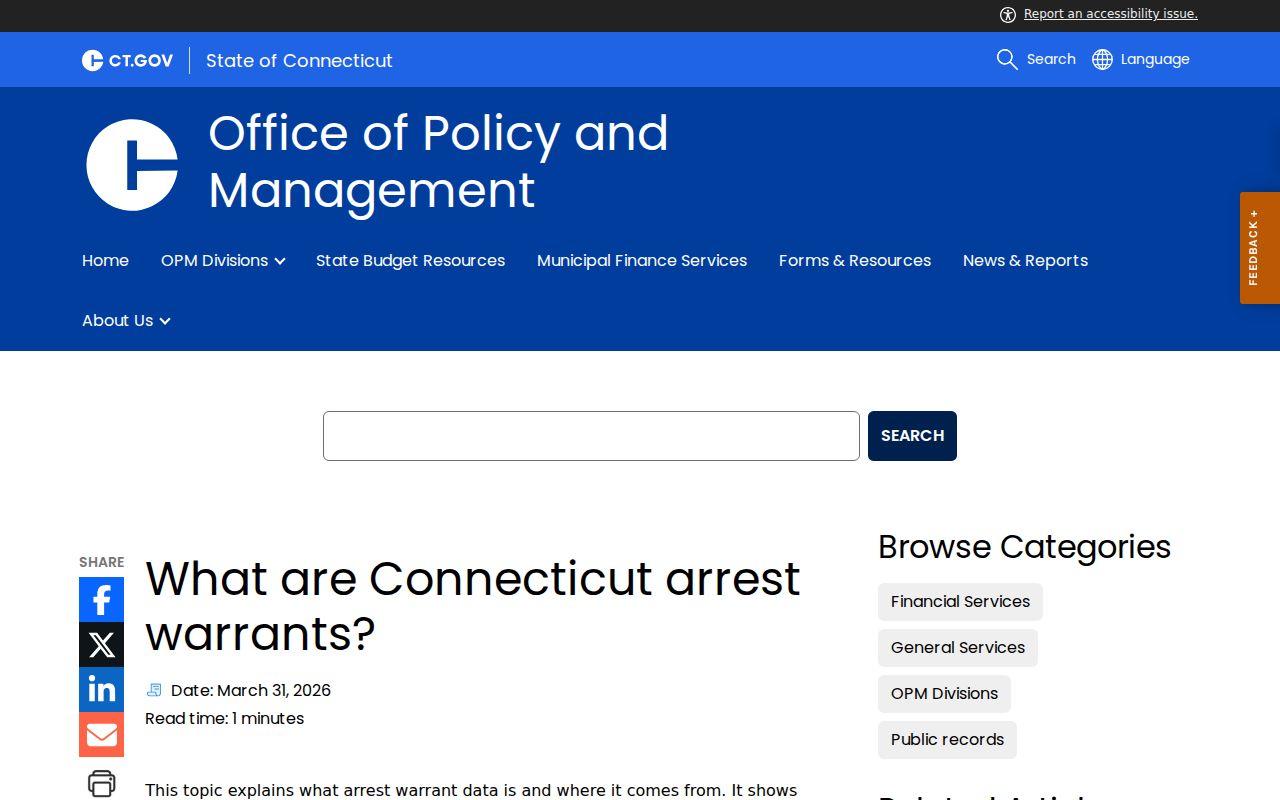
That official explanation keeps a Meriden data request, status check, or recall request aimed at the correct office. It also steers the question to the desk that can act.
Inside a Meriden Arrest Warrant
The signed order and the public record serve different jobs. Connecticut publishes no universal warrant-number format. So never guess from a number alone. A docket or case identifier helps the G.A. 7 clerk pull the right Meriden file. The underlying warrant often holds more detail than the public search result shows.
| Named subject | The identity stated in the order; confirm any name match with private identifiers. |
|---|---|
| Issuing court | The Connecticut Superior Court location and judge tied to the order. |
| Alleged offense | The charge supported by the complaint or affidavit, not a conviction. |
| Probable-cause basis | The sworn facts reviewed by the judge, subject to sealing and redaction rules. |
| Issue and status details | When the order issued and whether the responsible authority still treats it as active. |
| Release terms | Any bond or appearance direction set by the court and available in the record. |
A public interface can leave parts of that inventory out. Rely on a docket number from an actual Meriden notice rather than treating an assumed warrant code as confirmed.
Meriden Arrest Warrant Affidavits
An arrest warrant is not an arrest report. Connecticut FOI Act section 1-215 sets the floor for public arrest-record disclosures. It covers releases by police, not every court filing. Warrant applications and their supporting affidavits face different timing and access rules. A court may seal material. Redactions protect victims, witnesses, confidential sources, juveniles, and people shielded by law, in Meriden as everywhere. A records request to Meriden police works best when it is specific. Write the Meriden Police Records Division naming the exact record, a date range, and a known incident or docket reference. The Meriden counter sits at 50 West Main Street and operates from 10 a.m. to 4 p.m. except holidays. Written requests may go to PoliceRecords@meridenct.gov or fax 203-630-6257. Material from an active Meriden investigation may be unavailable. A withheld affidavit does not prove the order is inactive.
Note: If the Meriden record custodian denies or redacts a request, ask for the legal basis, and keep needless personal data out of ordinary email.
Serving Arrest Warrants in Meriden
Meriden Police officers serve criminal arrest warrants. So can other authorized law enforcement agencies. PRAWN, the Paperless Arrest Warrant Network, moves warrants among Connecticut criminal justice agencies. There is no public login. The network helps agencies coordinate, but it cannot replace the limited public Judicial Branch search or direct court confirmation. Routine service and high-risk service are different jobs. The MPD Special Operations page says its SWAT team carries out high-risk warrants only with command approval. That is operational context, not a hotline for an ordinary Meriden warrant check. The MPD non-emergency line is 203-238-1911. Meriden does not label it a warrant-confirmation line, so confirm with the court. For high-risk operations, the official MPD description of high-risk warrant service shows how that Meriden unit is deployed.
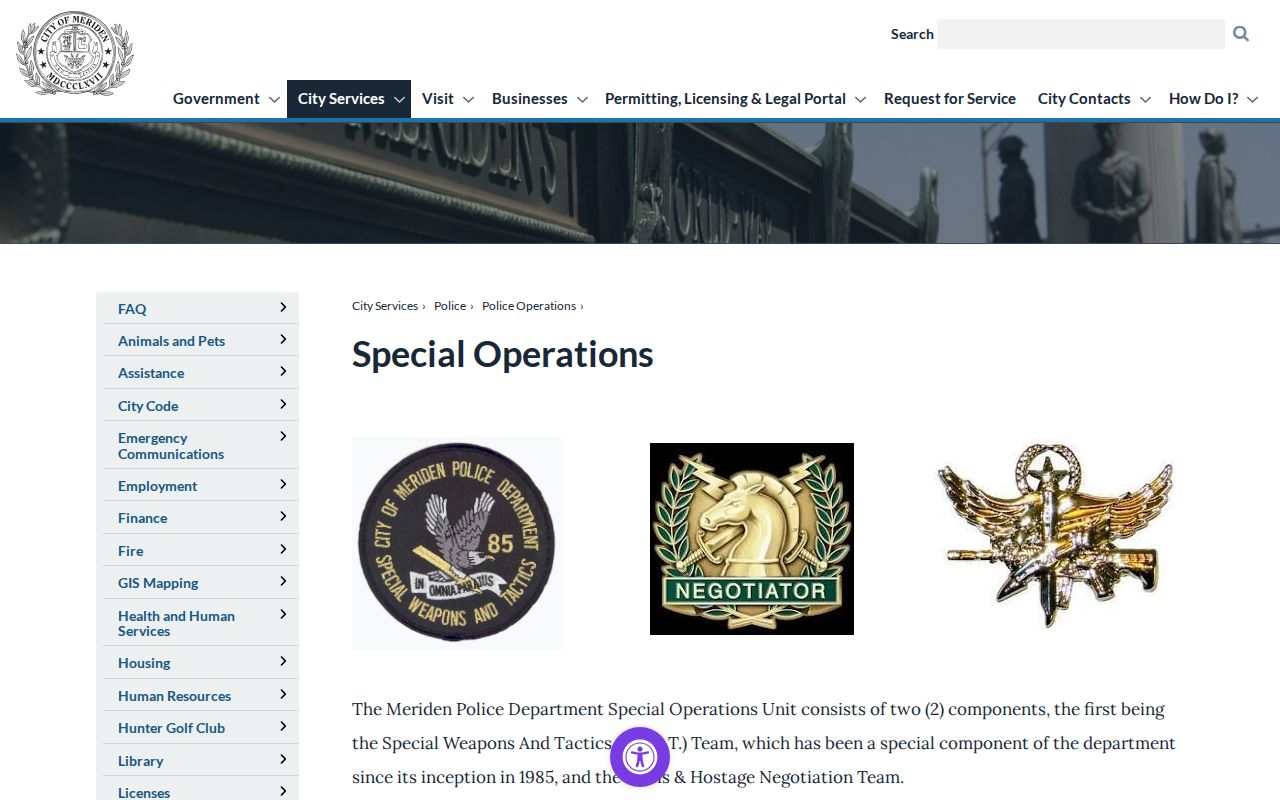
That official Meriden page shows why tactical units are not records counters and not the right source for self-surrender advice.
PRAWN and Meriden Arrest Warrants
PRAWN stands for the Paperless Arrest Warrant Network. Many Meriden arrest warrants live there once a judge signs them, and only criminal justice agencies can query the system. The Meriden public sees none of it. A PRAWN warrant may never reach a public page. The Connecticut CJIS overview explains the secure system that lets agencies enter, update, clear, and serve warrant information. The Judicial Branch warrant interface warns Meriden users that it does not display all warrant types, and that Failure to Appear warrants will not be displayed until further notice. A blank Meriden search reflects one limited interface at one moment. It is not a clearance certificate. The official agency-system description spells out PRAWN's role.
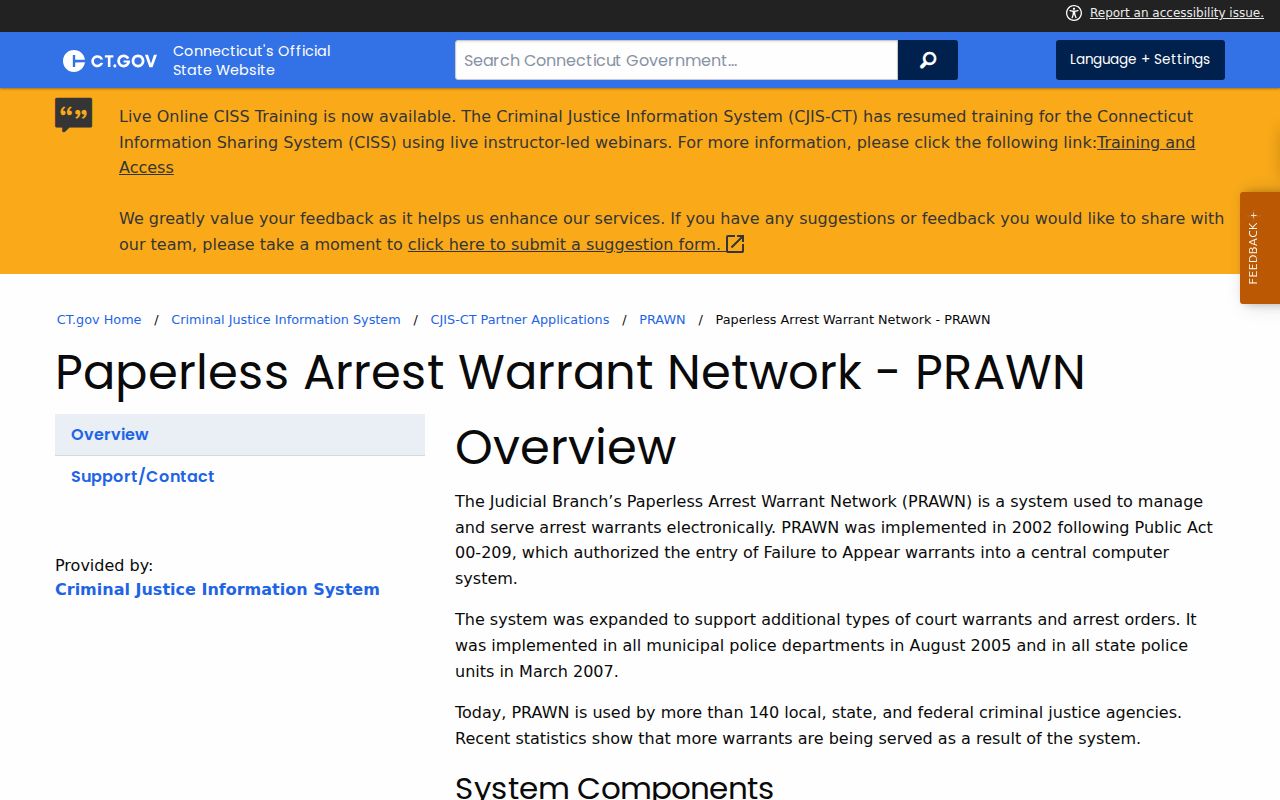
A public Meriden arrest warrant search and an agency warrant-management tool answer two different questions entirely.
Comparing Arrest, Summons, and Bench Warrants
The name on the paper matters. An arrest warrant, a summons, and a bench warrant can all tie to one Meriden criminal case, yet each calls for a different response. Read the court and docket details before calling G.A. 7 or counsel.
| Feature | Arrest warrant | Summons | Bench warrant |
|---|---|---|---|
| Main command | Authorizes arrest | Directs a person to appear | Authorizes arrest after a court-related failure or order |
| Typical basis | Probable cause of an offense | A charge set for a later appearance | A missed appearance or failure to comply |
| First response | Confirm with court and counsel | Attend as directed | Ask the issuing court about recall or appearance |
| Public search limit | Not all types display | May appear as case context | FTA display is currently suspended |
The separate Meriden bench warrant search discussion covers the failure-to-appear process. It maps the court-focused route, and a pending case or a summons alone does not prove an active warrant.
Meriden Arrest Warrant Status Changes
The public Judicial Branch arrest-warrant interface stamps each result with an "information is accurate as of" time. That stamp matters for any Meriden warrant check. A judge may recall an order, an officer may serve it, or a clerk may update the case after the posted time. Note the time of any self-check. Confirm important results with the controlling authority. The state interface covers only the warrant categories it names, including Violation of Probation and Orders to Incarcerate. The current FTA warning leaves a large gap. The pending criminal and motor-vehicle case lookup adds context. A pending Meriden docket is not itself proof of an active warrant.
Key point: No public result means only that this limited source showed no match at its stated update time.
Meriden Arrest Warrant Records
A status check and a records request are not the same job. One asks whether the court or agency still treats an order as active. The other asks for a copy of an existing public record. For material Meriden Police hold, send a narrow written request to Records. A disposed Superior Court file is different: the Judicial Branch Records Center wants the case name and docket number. The Connecticut Freedom of Information Act opens many agency records, but exemptions, sealing orders, and redactions still apply. The Records Center says disposed files are usually ready in one to two business days. Copying or certification can carry charges. That pace cannot settle an urgent Meriden arrest warrant question, so call the issuing court or speak with a lawyer when current status controls the decision.
Note: OPM aggregate reports show trends, not individual status, and cannot confirm or cancel any Meriden arrest warrant.
If There Is an Arrest Warrant for You
Do not walk up to an operation to test a Meriden warrant. Waiting for police contact is a bad plan too. Instead, note what the search actually showed: the source, the time you ran it, the court location, and any docket number on screen. Then call the G.A. 7 clerk at 203-238-6130 and ask which office controls the matter. Meriden identifiers belong only on the official private channel, so keep them off anything public. A Connecticut lawyer can weigh the risk and the right timing for a voluntary appearance. What happens next depends on the order itself. You might arrange a voluntary surrender, address bond through the court process, appear as directed, or file a motion to recall or vacate the warrant. "Recall" simply means the judge pulls the Meriden warrant out of active status. That call belongs to the issuing court alone. Neither MPD Records, nor OPM, nor the public search page can recall it for you.
Important: Confirm the order with G.A. 7 and seek legal advice before any voluntary appearance, bond step, or request for recall.
The Meriden Court Service Center sits at 54 West Main Street, second floor, and it can be reached at 203-238-6499. It offers forms, public computers, copying, scanning, and procedural help. Legal advice is off the menu there. For that, ask the public defender office at G.A. 7 about eligibility at 203-238-6135.